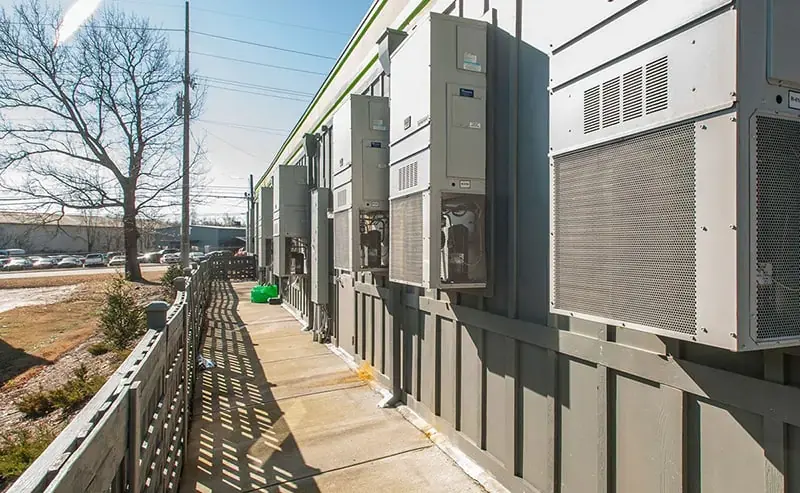
In modular construction, HVAC (Heating, Ventilation, and Air Conditioning) systems are designed and integrated differently than in traditional, site-built structures — with a focus on efficiency, standardization, and flexibility.
Here’s a breakdown of how HVAC is implemented and why it benefits modular builds:
How HVAC is Implemented in Modular Construction
Factory Integration
HVAC components—such as ductwork, air handlers, piping, and controls—are pre-installed in modules at the factory.
Each module (e.g., a hotel room, apartment unit, or office section) is designed with its own HVAC zone or connections ready for integration once on-site.
This ensures quality control, since installations occur in a controlled environment rather than on a variable construction site.
Prefabricated Mechanical Rooms or Pods
For larger buildings, entire mechanical or utility pods can be prefabricated off-site.
These pods include HVAC equipment, plumbing, and electrical systems pre-assembled and tested before shipment.
Plug-and-Play Connections
HVAC systems are designed with quick-connect couplings for ductwork, refrigerant lines, and electrical hookups.
This allows modules to be joined quickly on-site with minimal rework, ensuring rapid system commissioning.
Zoned and Decentralized Systems
Modular buildings often use zoned HVAC systems, such as:
PTAC units (packaged terminal air conditioners) for individual rooms.
VRF/VRV systems (Variable Refrigerant Flow/Volume) for multi-zone control and energy efficiency.
Mini-split systems for flexible and compact heating/ cooling per module.
These decentralized systems simplify design and reduce on-site coordination challenges.
BIM and Digital Design Integration
Building Information Modeling (BIM) tools are used to plan HVAC layouts precisely, ensuring all ductwork, piping, and electrical systems align across modules.
Digital modeling allows engineers to simulate airflow and temperature control before any module is built.
Benefits of HVAC in Modular Builds
Quality and Consistency
Factory-controlled environments ensure higher workmanship standards, better sealing, and tighter duct connections—improving energy efficiency and indoor air quality.
Reduced Construction Time
HVAC systems are pre-installed and tested before modules arrive on-site, shortening overall build time since mechanical installation runs in parallel with site preparation.
Cost Efficiency
Streamlined manufacturing processes reduce labor costs, material waste, and rework compared to traditional on-site HVAC installation.
Improved Energy Performance
Modular HVAC designs can be optimized for energy efficiency and integrated with smart building controls(e.g., demand-based ventilation or occupancy sensors).
Easier Maintenance and Scalability
Modular systems allow for easy access to HVAC components and straightforward replacement or upgrade of specific units without disrupting the whole building.
Buildings can be expanded or reconfigured by adding modules with pre-integrated HVAC systems.
Sustainability
Factory fabrication reduces waste and emissions associated with transportation and on-site construction.
Better air sealing and insulation from controlled assembly improve the building’s overall thermal performance.
Contact us for more information on HVAC installation.